How Tanning Looks Different on Dry Skin vs Normal Skin
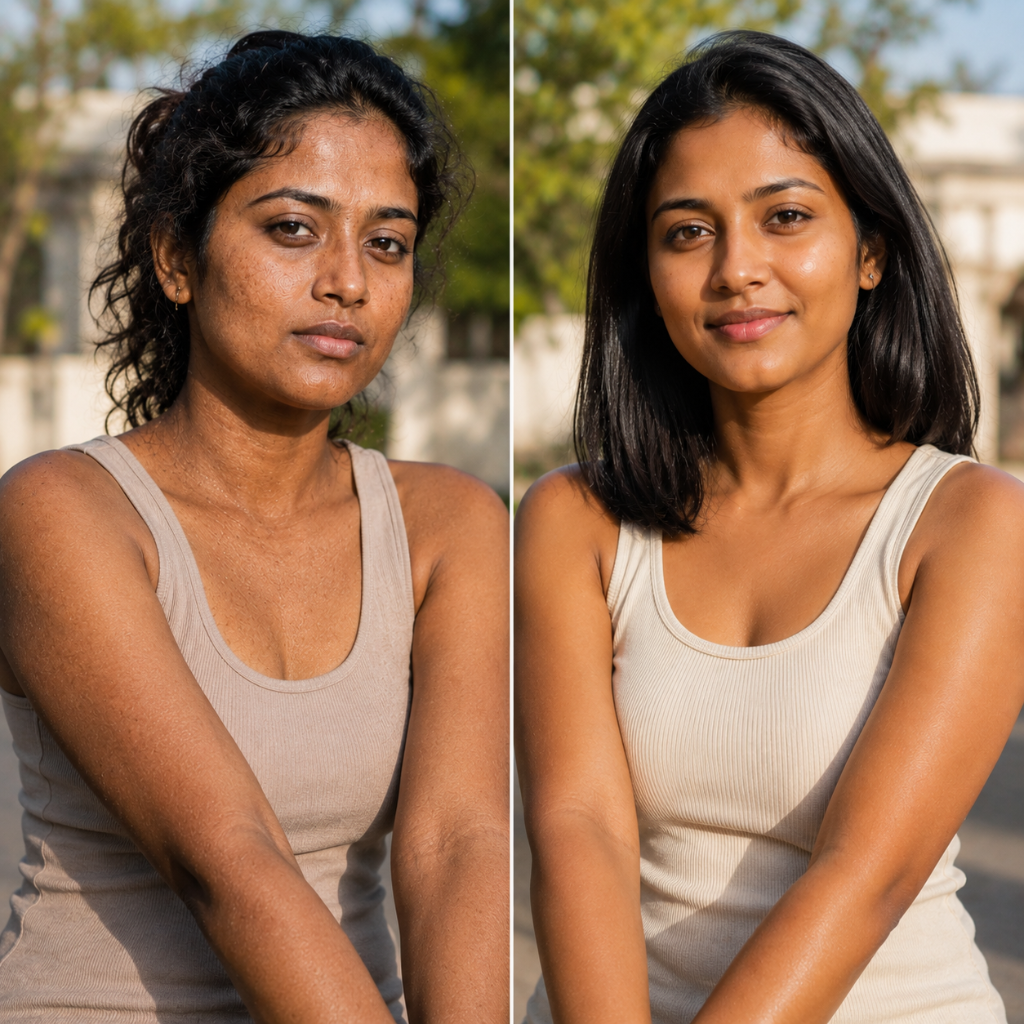
Two people can spend the same afternoon in the same sun and come away with very different tans. One looks evenly bronzed, the other blotchy and patchy. A lot of that gap comes down to skin type.
If your skin runs dry, your tan often behaves in ways that feel unfair, darker in patches and slower to fade. Understanding tanning on dry skin vs normal skin is the first step to treating it the right way.
In the clinic, we often see dry skin hold a tan unevenly, with some patches far darker than others. More often than not, it is hydration, not harder scrubbing, that finally starts to even things out.
For people struggling with persistent uneven tanning, professional tan removal can support the skin's natural renewal process and help restore a more balanced complexion.
Normal Skin vs Dry Skin: What Actually Differs
Before looking at how each one tans, it helps to know what sets them apart in the first place.
Normal skin, sometimes called balanced skin, makes just enough oil to stay comfortable. Its protective barrier is intact, so moisture stays sealed in, and the surface feels soft and smooth.
Dry skin produces less oil than it needs. That thin layer of oil, called sebum, is what normally keeps the barrier sealed and the surface supple. Without enough of it, the barrier develops tiny gaps, moisture escapes, and the skin feels tight, rough, or flaky.
This one difference, how much oil the skin makes and how strong its barrier is, shapes everything about how the two types meet the sun.
An easy way to tell where you sit: if your skin often feels tight after washing or shows fine flakes by evening, it most likely leans dry.
Tanning on Dry Skin vs Normal Skin
Here is where that barrier difference really shows. Identical sun exposure and the same melanin response, yet two very different results on the surface.
|
Aspect |
Normal Skin |
Dry Skin |
|
How the tan develops |
Settles evenly across a smooth surface |
Lands unevenly on a rough, flaky surface |
|
How it looks |
A fairly uniform, golden shade |
Blotchy, with darker and lighter areas |
|
How long it lingers |
Fades steadily as the skin renews |
Clings longer in the driest patches |
|
How the skin feels |
Comfortable, only a little drier |
Tight, rough and sometimes itchy |
|
What it needs most |
Sun protection and light care |
Deep hydration before anything else |
Put simply, normal skin tends to tan the way you expect, while dry skin reacts in a way that looks uneven and feels uncomfortable. Knowing which camp your skin falls into changes how you should treat a tan completely.
How Normal Skin Handles a Tan
Normal skin still tans, but it does so far more gracefully, and that is worth understanding before looking at why dry skin struggles.
With a healthy oil layer and an intact barrier, the surface stays smooth and even. When melanin rises after the sun, it settles uniformly across that smooth surface, so the colour comes out as a fairly even, golden shade rather than blotchy patches.
Recovery is easier, too. Normal skin renews on a steady cycle and sheds the tanned cells in good time, so the shade lifts on its own over a few weeks with little more than daily sun protection and simple care. It rarely needs rescuing, which is exactly where it parts ways with dry skin.
Why Dry Skin Tans Faster and More Patchily
It can feel like dry skin catches a tan more quickly, and there is a real reason behind that.
That oil layer and barrier normally act like a soft buffer against the sun. Dry skin has less of that buffer, so ultraviolet light reaches the living layers more easily and switches on melanin sooner. The colour can look deeper within the same amount of time outdoors. Worth noting too that UVA passes through glass, so even indoor exposure near windows quietly adds up.
Cool, dry air draws moisture from a barrier already running low, making the skin even more vulnerable to UV. This is also why tanning in cooler weather is more common than most people expect.
The Barrier, and Why the Tan Looks Uneven
The patchiness comes down to the surface itself.
Dry skin renews slowly, so dead cells build up in some spots more than others. Where that layer is thick and rough, light scatters and pigment settles unevenly, leaving darker blotches, while smoother areas stay lighter. This is the classic patchy tan on dry skin, where no two areas seem to match.
Add the slow renewal on top, and that uneven tan also takes longer to clear on its own.
Tan Removal for Dry Skin Without Making It Worse
This is where dry skin needs a gentler hand than most advice suggests. The popular fixes, hard scrubs and lemon or other acidic masks, are exactly wrong for a barrier that is already weak.
Scrubbing hard strips away what little oil is left and can leave the skin redder and more sensitive, rather than clearer. Lemon makes it worse still, since it irritates and raises sun sensitivity at the same time.
A dry-friendly routine puts moisture first:
- Hydrate well morning and night, so the surface is smooth enough to shed evenly
- Exfoliate gently and only about once a week, choosing mild options over gritty scrubs
- Wear sunscreen daily, since fresh sun quietly undoes any progress
- Avoid very hot water and long showers, which pull even more moisture from the skin
On dry skin, hydration does most of the tan removal work. A soft, well-moisturised surface fades colour far more evenly than any aggressive treatment ever will.
Give it a few weeks, too. Because dry skin turns over slowly, an even fade is gradual rather than overnight, and rushing it only sets things back.
Professional Help: Dry Skin vs Normal Skin
When a tan simply will not budge, a clinic can clear it faster, but the right approach is not the same for both skin types.
Normal skin is the more forgiving of the two. Because its barrier is strong, it handles standard de-tan peels and exfoliating facials comfortably and tends to clear in fewer sessions, often without much fuss.
Dry skin needs a gentler hand. At Tune Clinical Aesthetics, dry skin treatments lean on moisture rather than rough exfoliation, chosen to clear the tan while rebuilding the barrier instead of stripping it:
- A deeply hydrating facial gently clears dull, dead cells and floods the skin with moisture in one sitting, which suits tired, flaky skin well
- A mild, hydrating peel evens out pigment slowly without over-drying, making it a safer fit for dry and deeper complexions
- Barrier-focused care between sessions keeps the skin comfortable while the tan fades evenly
Most people find the skin looks plumper and more even after the first session, with the tan softening over a short course rather than all at once.
The aim is always an even finish. Dry skin pushed too hard tends to come back more blotchy, so a slower, moisture-led plan works better every time. A short look in person sets the right pace for your skin.
Conclusion
Tanning on dry skin vs normal skin really does come down to the barrier. Normal skin tans evenly and recovers on its own, while dry skin tans patchily, holds the colour longer, and needs moisture-led care to settle.
Struggling with a tan that never seems to fade evenly? Dry skin almost always needs a different plan, and sitting with the skin team at Tune Clinical Aesthetics in Coimbatore or Chennai can pinpoint what your skin is missing and build a routine around it.