HydraFacial for Dark Skin: Is It Safe and Effective?
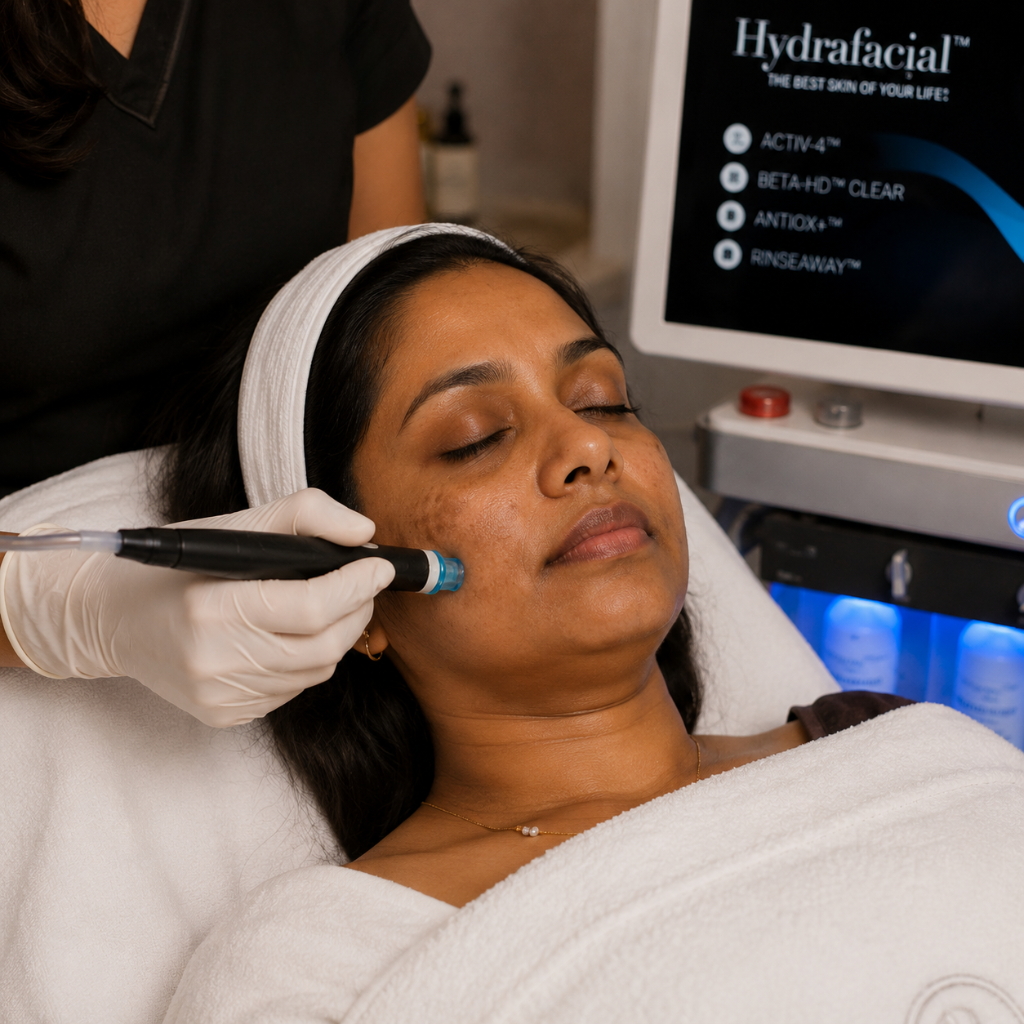
HydraFacial for dark skin is a concern often raised by people dealing with pigmentation-prone skin, and the hesitation is understandable.
Many popular skin treatments work well on lighter complexions but trigger lasting pigmentation problems on darker, melanin-rich skin.
The good news is that HydraFacial is one of the few non-invasive facials specifically designed to be safe across all skin tones, including Fitzpatrick IV to VI, which most South Indian skin falls into.
This guide covers the safety, the results you can realistically expect, and what to look for before booking your first session.
Why Dark Skin Needs a Different Approach to Facials
Dark skin behaves differently from lighter skin in ways that directly affect how facials should be performed. The same treatment that brightens lighter complexions can darken darker ones if the underlying biology is ignored.
Melanin Behaviour in Fitzpatrick IV to VI Skin
South Indian skin generally falls in the Fitzpatrick IV to VI category, which means the melanocytes are more active and produce melanin in larger quantities and more readily than lighter skin types.
This active melanin response evolved as protection from intense sun, and it works beautifully against UV damage. But it also means melanocytes are easily triggered by inflammation, friction, heat, or harsh actives.
Once triggered, melanocytes release extra pigment that settles into the skin and creates dark patches that can take months to fade. Understanding this single fact changes how every facial should be approached on darker skin.
Common Risks From Aggressive Facials on Dark Skin
Treatments that rely on aggressive exfoliation, strong acid concentrations, or heat-based devices carry a real risk of post-inflammatory hyperpigmentation, often called PIH.
This shows up as darker patches that appear days or weeks after the treatment, in the exact areas that were treated. Strong peels, certain laser settings, and rough physical exfoliation can all trigger this response in dark skin.
Many clients with dark skin have experienced a facial that looked great in the mirror that evening, but left a darker patch on the cheek or forehead two weeks later. That is PIH in action, and it is the single biggest reason to choose a treatment that respects melanin-rich skin.
Is HydraFacial Safe for Dark Skin Tones?
Yes, HydraFacial is safe for dark skin when performed correctly. The treatment works through vacuum-based extraction and serum infusion rather than mechanical abrasion or heat, which removes the two biggest triggers for PIH in melanin-rich skin.
The exfoliation step uses a gentle acid blend at carefully chosen low concentrations, designed to clear surface dead cells without inflaming the deeper layers where melanocytes sit. This careful balance is exactly what darker skin needs.
Unlike laser-based treatments, no heat reaches the skin during a HydraFacial. Unlike strong chemical peels, no aggressive controlled wounding takes place. The skin walks away calmer than it walked in, which is the opposite of the inflammation that triggers PIH.
That said, the safety still depends on the professional handling the device. Pressure settings, booster choice, and post-care need to be adjusted for darker skin tones, which is why choosing experienced HydraFacial care matters more than the device itself.
HydraFacial Results for Dark Skin
The table below shows realistic results to expect across the most common concerns for dark skin, along with the typical sessions needed and when the first visible change tends to appear.
| Concern | Expected Result | Sessions Needed | First Visible Change |
|---|---|---|---|
| Surface tan from sun exposure | Brighter, more even tone | 3 to 4 sessions | Session 2 |
| Dark spots and PIH patches | Gradual fade, smoother tone | 4 to 6 sessions | Session 3 |
| Dullness and uneven texture | Restored glow, refined texture | 2 to 3 sessions | Session 1 |
| Congestion and clogged pores | Clearer, smoother pores | 2 to 3 sessions | Session 1 |
| Dehydration on darker skin | Plumper, healthier finish | 1 to 2 sessions | Session 1 |
Fading Tan and Dark Spots Safely
Tan and dark spots are two of the most common concerns clients with darker skin bring to our clinic. HydraFacial offers a controlled approach that addresses both without the inflammation risk of harsher treatments.
How It Targets Tan Without Triggering PIH
Surface tan sits in the upper layers of the skin, where dead cells carry the excess melanin that has built up under repeated UV exposure. HydraFacial uses gentle exfoliation to lift these surface layers along with the trapped pigment they carry.
Because the process is non-traumatic, the melanocytes underneath are not provoked into producing more pigment. This is the key advantage over rougher methods that strip the upper layers too aggressively and trigger a fresh burst of melanin in defence.
For most clients with darker skin tones, a course of 3 to 4 monthly sessions visibly improves mild to moderate tanning without the rebound darkening that more aggressive treatments sometimes cause. Understanding HydraFacial results month by month also helps set realistic expectations before beginning a full treatment course.
What It Does for Dark Spots and Pigmentation Patches
Dark spots are deeper than tan and need more time to clear. The brightening serums used during the infusion stage of a HydraFacial contain ingredients that gently inhibit excess melanin activity and support more even tone.
Across 4 to 6 sessions, the pigmentation in dark spots gradually fades, and the surrounding skin tone becomes more even. The change is slow but steady, which is exactly what dark skin needs to avoid the rebound effect that aggressive treatments cause.
PIH from old acne or previous skin injuries also responds well, often clearing more visibly than fresh sun spots because the underlying pigment sits closer to the surface and lifts more easily.
For clients where pigmentation is the primary concern rather than tanning, HydraFacial protocols for hyperpigmentation usually involve more targeted booster selection and longer treatment planning.
What to Look For When Booking a HydraFacial for Dark Skin
Not every clinic adjusts the treatment properly for darker skin. A few specific checks help separate a melanin-aware service from a generic one.
Ask whether the clinic regularly treats Fitzpatrick IV to VI skin and what specific adjustments they make. The right answer mentions reduced pressure settings, gentler exfoliation strength, and brightening boosters chosen for darker skin.
Confirm the serums and boosters contain proven brightening ingredients rather than harsh skin-lightening agents. Aggressive lightening products often backfire on darker skin and can trigger the very pigmentation they claim to fix.
Check that the practitioner offers a proper consultation before the first session. A short skin assessment in strong daylight should be standard so that the right plan can be built around your specific concerns and goals.
Finally, confirm the aftercare guidance you receive. Strict broad-spectrum SPF 50, gentle moisturisation, and avoidance of strong actives in the first 72 hours are baseline. Without these, even the best session loses half its value.
Final Thoughts
HydraFacial for dark skin is genuinely safe and effective when handled correctly, which puts it in a small group of facials that work well with melanin-rich complexions.
The treatment respects the biology of darker skin instead of fighting it. That is why clients in Chennai and Coimbatore who have struggled with PIH after other facials often come back surprised at how calm and even their skin looks after a HydraFacial course.
Choose a clinic that genuinely understands darker skin, follow the aftercare, and the results will hold without the rebound that other treatments so often bring.
Ready for a HydraFacial Built Around Your Skin Tone?
Book a melanin-aware assessment with our aesthetic team.
We examine your skin's specific behaviour, pick boosters that suit darker tones, and design a session plan that targets your concerns without rebound darkening.
Visit: https://tuneaesthetics.com/