Tan Lines on the Body: Why They Form and How to Fade Them
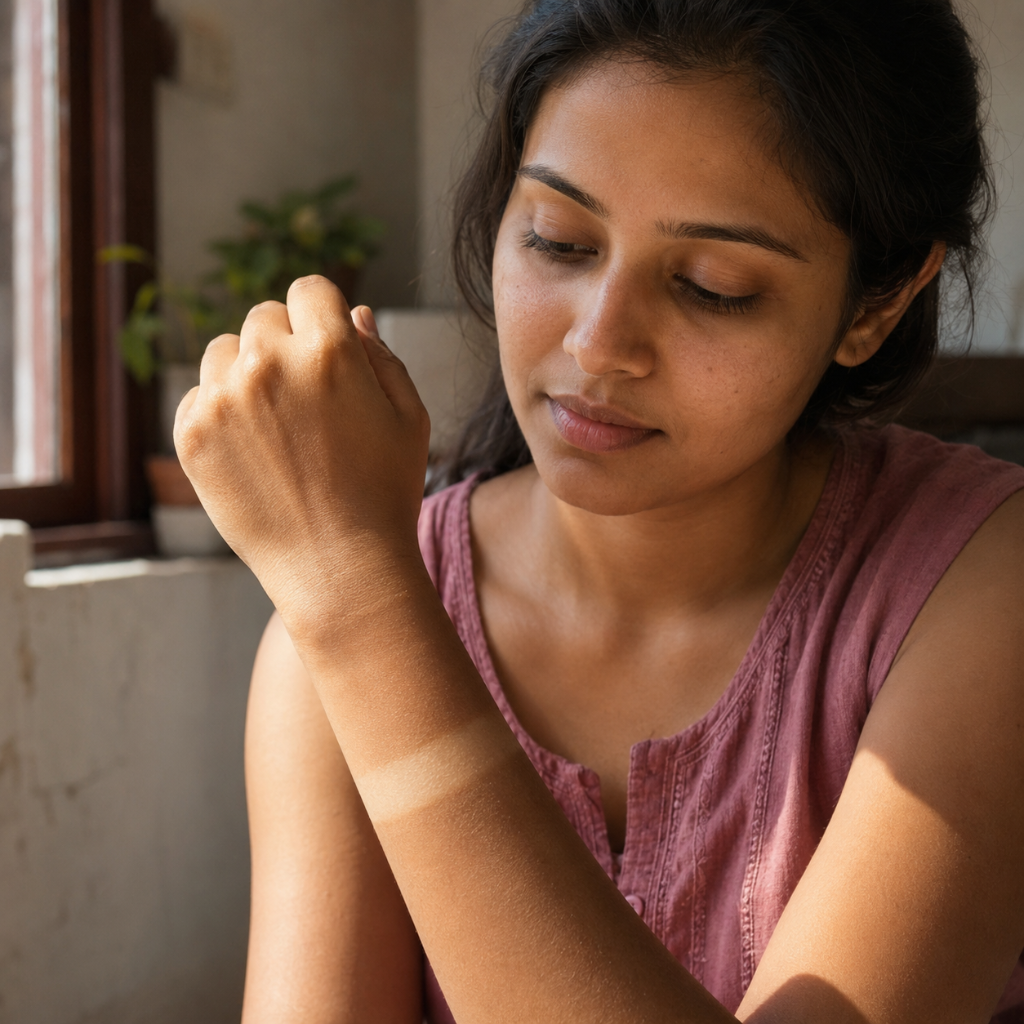
Tan lines have a way of showing up at the worst possible time. A wedding next week, a sleeveless outfit ready to go, and suddenly, there is a sharp two-tone edge on your arm where the fabric used to sit.
We hear about it every week at our clinics in Chennai and Coimbatore. The good news is simple. Tan lines on the body are rarely permanent, and the right approach fades them safely.
One client came to us deeply tanned after four months of travelling, and assumed it would take forever to fade. A single skin tan removal session made a visible difference, and she left genuinely surprised at how much fresher her skin looked.
Why Do Tan Lines Form on the Body
It comes down to one thing: uneven sun exposure.
When sunlight hits your skin, it tells that area to make more melanin, the pigment that darkens skin to protect it. Covered skin never gets that message, so it stays its usual shade.
Put the two side by side, and you get a line, drawn exactly where your sleeve or strap ended. In our climate, where the sun is strong almost every day, that line can appear after a single afternoon outdoors.
This is also why a tan line can look darker than the rest of your tan. The exposed strip has been working overtime to shield itself, while the covered skin beside it has done nothing at all.
Why the Line Looks So Sharp
A normal tan blends into your skin gradually. A tan line does not.
A snug watch strap or a fitted sleeve stays in one place all day, so it leaves a clean, hard edge. Looser clothes shift around and blur the line a little.
Time outdoors matters just as much. Ten minutes will not mark you, but a couple of hours under the midday sun can set a line that lasts for weeks.
We see this constantly with clients who ride a two-wheeler to work, a sharp glove line across both hands that can look almost drawn on.
Where Sun Tan Lines on Arms and Legs Show Up Most
Not all tan lines are equal. How dark and stubborn a line gets depends on where it sits, how thick the skin is there, and how often that spot meets the sun.
The table below shows the pattern we notice across most clients.
|
Body Area |
Why the Line Forms |
How Stubborn |
Safe Approach |
|
Forearms and wrists |
Daily sun on commutes, often with a watch or sleeve edge |
High |
Gentle exfoliation, sunscreen, a body peel if set in |
|
Upper arms and shoulders |
Sleeveless tops expose skin that was covered for months |
Moderate |
Daily SPF, hydration, slow evening of tone |
|
Neck and V neckline |
Folds and angles catch light unevenly |
Moderate to high |
Mild care only, this skin is thin and reactive |
|
Legs and ankles |
Hemlines and sock edges sit on thicker skin |
Moderate, slow |
Moisturise, light exfoliation, peels if stubborn |
|
Feet and sandal straps |
Strap shapes mark thick, slow renewing skin |
Very high |
Patience and clinic guidance, no harsh scrubbing |
In short, thin and often exposed skin clears faster. Thicker skin on the feet and elbows holds on to pigment and needs more patience.
Knowing this changes the plan. A faint line on your upper arm may clear with sunscreen alone, while a deep strap line on your foot rarely will.
How to Get Rid of Tan Lines Safely at Home
Search how to get rid of tan lines, and the internet sends you straight to the kitchen: lemon, tomato, raw potato. We have to be honest here, some of these do more harm than good.
Lemon juice is the biggest culprit. It irritates the skin and makes it far more sensitive to sunlight, so you can end up darker and patchier than before. Harsh scrubbing is the other one, since it inflames the skin and can trigger fresh pigment on deeper tones.
What actually works at home is mild and steady:
- Mild exfoliation once or twice a week, never aggressive scrubbing
- A simple hydrating moisturiser to keep the skin barrier healthy
- Broad-spectrum sunscreen every morning, without fail
Home care softens a fresh line. A line that has settled in usually needs a professional hand.
Give it time, too. Even with the right routine, a fresh line takes two to three weeks to soften, and there is no safe way to rush it overnight.
Professional De-Tan Options for Uneven Tan on the Body
When an uneven tan on the body has not budged after a few weeks of home care, a body tan removal treatment can speed things up safely. At Tune Clinical Aesthetics, the treatment is always matched to the body area and how deep the pigment sits.
For deeper Indian skin tones, this has to be done with a careful, measured touch to avoid rebound darkening. That is the part home remedies get wrong. A few options we use:
- Body peels are our usual starting point for a set in line on the arms or legs. Gentle acids such as mandelic or lactic acid lift the tanned surface layer evenly, and they suit medium to deep skin well.
- De tan medi facials are the better choice when you want a quick, visible refresh before an event. They clean, exfoliate and hydrate the face, neck and shoulders in one sitting.
- Laser toning is kept for older, deeply set lines that have not eased with peels. It is calibrated carefully for darker skin.
As a simple rule, a fresh or moderate line responds well to a peel or a medi facial, while a stubborn, long-standing line is where laser toning earns its place. Thin, reactive areas like the neck are always treated gently, whatever the method.
An in-person look also matters more than any one cream. Two lines that seem similar can sit at very different depths, and the plan changes with each.
Most people see a clear difference within a short course of three to six sessions, depending on the area. We always start light and build up, rather than going hard in one go.
How to Stop Tanning Lines on Skin from Coming Back
Fading a line is only half the job. Stopping the next one is what keeps your skin even all year.
Sunscreen does most of the heavy lifting. Use a broad-spectrum SPF 50, apply it generously, and reapply every few hours when spending time outdoors. Many people assume tanning only happens in summer, but UV exposure during cooler months can still darken the skin. Consistent protection is essential if you want to avoid needing future tan removal treatments.
A few simple habits help too:
- Move your watch and bag straps to a slightly different spot now and then
- Wear light full sleeves on long commutes
- Stay in the shade during the harsh midday hours
- None of this is dramatic. Done steadily, it keeps your tone uniform.
Conclusion
Tan lines on the body look stubborn, but they are very treatable.
Most fresh lines fade with patient home care, gentle exfoliation and daily sunscreen. Older, sharper lines on areas like the feet or forearms simply need a little professional help to even out safely. The mistake we see most is people reaching for lemon and hard scrubs, which often make things worse.
If a tan line has been bothering you for weeks, or an event is coming up, a short guided plan gets you there faster and more safely than guesswork. If you are in Chennai or Coimbatore, a quick assessment at Tune Clinical Aesthetics can tell you exactly what your skin needs.