PRP Treatment for Hair: How It Works, Results, Cost & PRF Compared
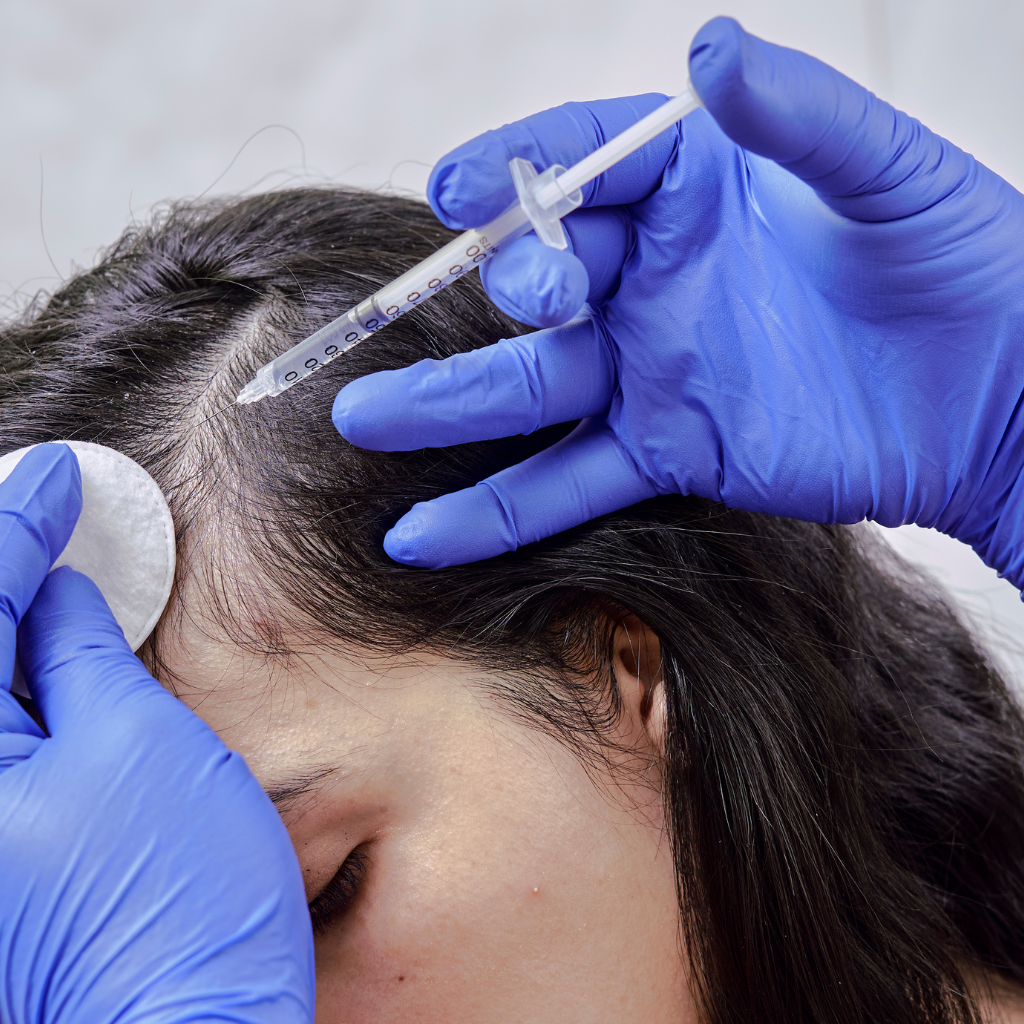
PRP treatment for hair is a non-surgical procedure that uses platelet-rich plasma prepared from your own blood and delivers it into areas of the scalp affected by thinning. PRP has been studied most extensively for androgenetic alopecia (pattern hair loss), with research suggesting that it may improve hair density in some patients. However, results vary, and PRP protocols differ between studies and clinics.
PRP is not a universal solution for every type of hair loss. The underlying cause, stage of hair loss and condition of the hair follicles should be assessed before deciding whether PRP is appropriate.
This guide explains how PRP works for hair loss, expected results, the number of sessions, cost factors, possible side effects and the difference between PRP and PRF, including Tune Clinical Aesthetics' PRF-based Profibrin approach.
Key Takeaways
- PRP for hair loss uses platelet-rich plasma prepared from your own blood and injected into areas of scalp thinning.
- PRP has been studied most extensively for androgenetic alopecia or pattern hair loss.
- Clinical evidence suggests PRP may improve hair density in some patients, although the quality and consistency of evidence vary between studies.
- PRP usually involves a series of sessions rather than a single procedure, with the schedule determined according to the patient's condition and treatment protocol.
- PRP is intended to support existing follicles; it cannot recreate follicles that have been permanently destroyed.
- PRF (platelet-rich fibrin) is another autologous platelet-based approach prepared differently from PRP. Evidence for PRF in hair loss is promising.
What Is PRP Treatment for Hair?
Platelet-rich plasma (PRP) is prepared from a small sample of your own blood. The blood is processed to separate the plasma and concentrate platelets, which contain growth factors and other bioactive substances.
For hair loss, PRP is typically injected into areas of the scalp affected by thinning. Its use has been studied particularly in androgenetic alopecia, also known as male or female pattern hair loss. Systematic reviews and meta-analyses have reported potential improvements in hair density, although differences in preparation methods, treatment schedules and study quality make it difficult to establish one standard PRP protocol.
How Does PRP for Hair Loss Work?
PRP is intended to support the environment around existing hair follicles. The platelets in PRP contain growth factors and other signalling molecules that may influence follicular activity and the surrounding scalp tissue.
The goal is not to create completely new follicles. Instead, PRP may help support weakened or miniaturised follicles that are still present, potentially improving hair density and thickness in responsive patients.
Research has reported improvements in hair density with PRP in androgenetic alopecia, but the magnitude of benefit varies between studies. A 2024 systematic review found potential benefit but also highlighted moderate risk of bias and substantial differences between studies.
What Happens During PRP Hair Treatment?
At Tune Aesthetics, our advanced PRP hair treatment involves following steps:
1. Scalp Assessment
Our experts first evaluate your hair loss pattern, scalp health, medical history and overall hair health. This helps identify the possible cause of hair loss and whether PRP may be appropriate.
2. Blood Collection
A small amount of blood is drawn from your arm, similar to a routine blood test.
3. PRP Preparation
The blood sample is processed using a centrifuge to separate and concentrate the platelets. The resulting platelet-rich plasma is then prepared for application.
4. Scalp Treatment
The prepared PRP is carefully administered into areas of the scalp experiencing thinning. The exact technique and treatment protocol can vary depending on the clinic and your individual requirements.
5. Follow-Up Sessions
PRP is generally performed as a series of sessions rather than as a one-time procedure.. Your response is monitored to determine whether further or maintenance sessions are needed.
The Indian Association of Dermatologists, Venereologists and Leprologists recommends multiple PRP sessions for androgenetic alopecia, with schedules tailored to individual patients.
Who Can Benefit From PRP for Hair Loss?
PRP may be considered for people with non-scarring hair loss, particularly androgenetic alopecia, when viable hair follicles are still present.
It may be considered in cases involving:
- Early or moderate pattern hair loss
- Gradual reduction in hair density
- Thinning where existing follicles are still present
- Certain cases of androgenetic alopecia that have been clinically assessed
However, not every type of hair loss responds to PRP.
Hair shedding can also be associated with nutritional deficiencies, hormonal changes, stress-related shedding, scalp disorders, medications and other medical conditions. Some forms of alopecia can also cause permanent follicular destruction and require different management.
The cause of hair loss should therefore be established before choosing PRP.
How Many PRP Hair Treatment Sessions Are Needed?
There is no single number of sessions that is appropriate for everyone. The number of PRP hair treatment sessions depends on factors such as the underlying cause of hair loss, the extent and pattern of thinning, the condition of the existing follicles, your response to PRP and the treatment protocol being used.
For androgenetic alopecia, an initial course of multiple sessions may be recommended, with sessions typically spaced several weeks apart. Maintenance sessions may be considered depending on your response.
Because hair grows in cycles, visible changes usually take time and should not be expected immediately after a session.
PRP Hair Before and After: What Results Can You Expect?
Searches for PRP hair before and after often create expectations of dramatic transformations. In practice, results are more gradual and can vary significantly between individuals.
PRP is primarily intended to support existing, weakened follicles. Depending on your condition and response, you may notice:
- Reduced hair shedding
- Improved hair thickness
- Better-looking hair density
- Stronger existing strands
- Gradual improvement in areas of thinning
PRP cannot recreate follicles that have been permanently destroyed. The earlier hair loss is evaluated, the more opportunity there may be to support follicles that are still active.
PRP Hair Results Timeline
The timing of results can vary between individuals. An indicative timeline is:
Time period | What you may notice |
First few weeks | Little visible change may occur while the normal hair-growth cycle continues. |
2–3 months | Some people may begin noticing changes in shedding or hair quality. |
Around 3–6 months | Improvements in hair thickness or density may become more noticeable in responsive patients. |
After 6 months | Your dermatologist can assess your response and discuss maintenance or other treatment options if required. |
These timeframes are indicative rather than guaranteed. Your results depend on the cause of hair loss, follicle health, treatment protocol and individual response.
PRP Hair Treatment Cost in India
The cost of PRP for hair in India varies between clinics and patients. Factors that can influence the final cost include:
- Number of sessions required
- PRP preparation method
- Clinic location
- Treatment protocol
- Extent and pattern of hair loss
- Whether PRP is being combined with other hair-loss therapies
Rather than relying on a fixed national price, the exact cost should be confirmed with the clinic after assessment.
At Tune Clinical Aesthetics, the PRP treatment plan and associated cost depend on your hair-loss pattern, scalp condition and the number of sessions recommended.
Is PRP Good for Hair?
PRP can be a useful option for certain types of hair loss, particularly androgenetic alopecia, when existing hair follicles are still present and may respond to regenerative treatment.
However, PRP is not appropriate for every cause of hair loss. Hair thinning or shedding can be associated with factors such as:
- Pattern or genetic hair loss
- Nutritional deficiencies
- Hormonal changes
- Stress-related shedding
- Scalp conditions
- Other underlying medical factors
Identifying the underlying cause is therefore an important part of deciding whether PRP is appropriate.
PRP vs PRF: Why PRF Is a More Advanced Approach
If you are comparing PRP vs PRF for hair loss, the difference goes beyond the name. Both treatments use components derived from your own blood, but they are prepared differently and have different characteristics.
Factor | PRP | PRF |
Full form | Platelet-Rich Plasma | Platelet-Rich Fibrin |
Source | Patient's own blood | Patient's own blood |
Anticoagulant | Used during preparation | Not used |
Structure | Platelet-rich plasma | Fibrin matrix |
Growth-factor release | Primarily delivered through the plasma preparation | Associated with a more gradual release from the fibrin matrix |
Suitability | Depends on the cause and pattern of hair loss | Depends on the cause and pattern of hair loss |
PRF is considered a more advanced regenerative approach because of its fibrin-based structure and gradual release characteristics. Research into injectable PRF for pattern hair loss is still developing, so treatment selection should be based on the individual's hair-loss pattern and clinical assessment.
At Tune, we offer this approach through Profibrin, our branded PRF treatment for hair. It may be considered when our dermatologists determine that a PRF-based regenerative approach is appropriate for the patient's scalp and hair-loss pattern.
What We Use at Tune: Profibrin
At Tune Clinical Aesthetics, our regenerative hair treatment is Profibrin, a PRF-based treatment designed to support existing hair follicles through the regenerative properties of platelet-rich fibrin.
PRP can be useful for selected cases of pattern hair loss, and research supports its potential to improve hair density in appropriate cases. But regenerative hair treatment is not one-size-fits-all.
Profibrin takes the PRF approach further, using a fibrin matrix designed for a more gradual release of growth factors. At Tune, we consider it as part of a personalised hair regrowth plan based on the cause and pattern of hair loss, follicle health and your treatment goals.
With skin clinic in Chennai and skin clinic in Coimbatore, Tune Aesthetics takes a precision-led approach to hair restoration, with treatment plans tailored to the individual rather than a fixed protocol. Our dermatology-led team assesses your hair and scalp before recommending the most appropriate approach.
To explore this regenerative approach further, see our Advanced Regenerative Therapy (Hair Re-Growth). If you are looking at broader solutions for hair thinning and hair loss, explore our Hair Loss Treatment options.
PRP vs Other Hair Loss Treatments
PRP is one of several approaches available for managing hair loss. Its role becomes clearer when compared with other treatment options.
PRP vs Topical Hair Loss Treatments
Topical treatments work through different mechanisms and may be prescribed depending on the cause of hair loss. PRP can sometimes be used alongside conventional treatments as part of a broader management plan.
PRP vs Hair Transplant
A hair transplant involves surgically moving hair follicles from one part of the scalp to another. PRP is a regenerative treatment intended to support existing follicles.
They address hair loss differently and are not interchangeable.
PRP vs GFC
Growth Factor Concentrate, or GFC, is another regenerative hair treatment. While both approaches use growth-related factors to support the scalp, their preparation methods differ.
The choice between PRP, GFC or another treatment depends on your hair-loss pattern, scalp condition and treatment goals.
Who Is PRP Hair Treatment Suitable For?
PRP may be considered for individuals with certain forms of non-scarring hair loss, particularly when existing hair follicles are still present and may respond to treatment.
It may be considered for people with:
- Early or moderate pattern hair loss
- Thinning hair with viable follicles
- Gradual reduction in hair density
- Hair loss that has been medically assessed and may respond to regenerative treatment
PRP may not be appropriate when hair follicles have been permanently destroyed or when an underlying condition requires a different treatment approach. A clinical assessment can help determine whether PRP is appropriate for your specific type and stage of hair loss.
Frequently Asked Questions About PRP for Hair Loss
Is PRP painful?
PRP involves administering injections into the scalp, hence, slight discomfort may occur. A numbing approach may be used to make the procedure more comfortable.
How long does a PRP hair treatment session take?
The duration can vary depending on the preparation and treatment protocol. Your clinic can provide an estimated appointment time during your consultation.
Can PRP completely regrow lost hair?
PRP should not be viewed as a guaranteed hair restoration treatment. Its primary purpose is to support existing follicles and potentially improve hair density and thickness.
Is PRF better than PRP for hair loss?
PRF uses a fibrin matrix and no anticoagulant additives, allowing a slower release of growth factors. Whether it is preferable depends on your individual hair-loss assessment.
What is Profibrin?
Profibrin is Tune Clinical Aesthetics' branded PRF treatment for hair, using the principles of platelet-rich fibrin to support existing follicles as part of regenerative hair care.
Bottom Line
PRP treatment for hair can be a useful non-surgical option for supporting existing hair follicles and improving hair thickness and density in appropriate cases. However, PRP is not a one-size-fits-all solution and cannot restore follicles that have been permanently lost.
The most important step is understanding the cause of hair loss and whether viable follicles are still present. Based on your hair-loss pattern, scalp condition and treatment goals, your dermatologist can determine whether PRP, PRF-based Profibrin or another Hair Loss Treatment is more appropriate.
At Tune Clinical Aesthetics, the best skin and hair clinic in India we identify the underlying cause before recommending a regenerative hair treatment. If you are experiencing thinning, shedding or gradual hair loss, a personalised consultation can help determine the approach that best fits your hair and scalp.
Popular Searches
Body Tan Removal In Chennai | Hydrafacial In Chennai | Laser Hair Removal In Chennai | Acne Treatment In Chennai
Popular Blogs
How To Remove Black Pimples For Face